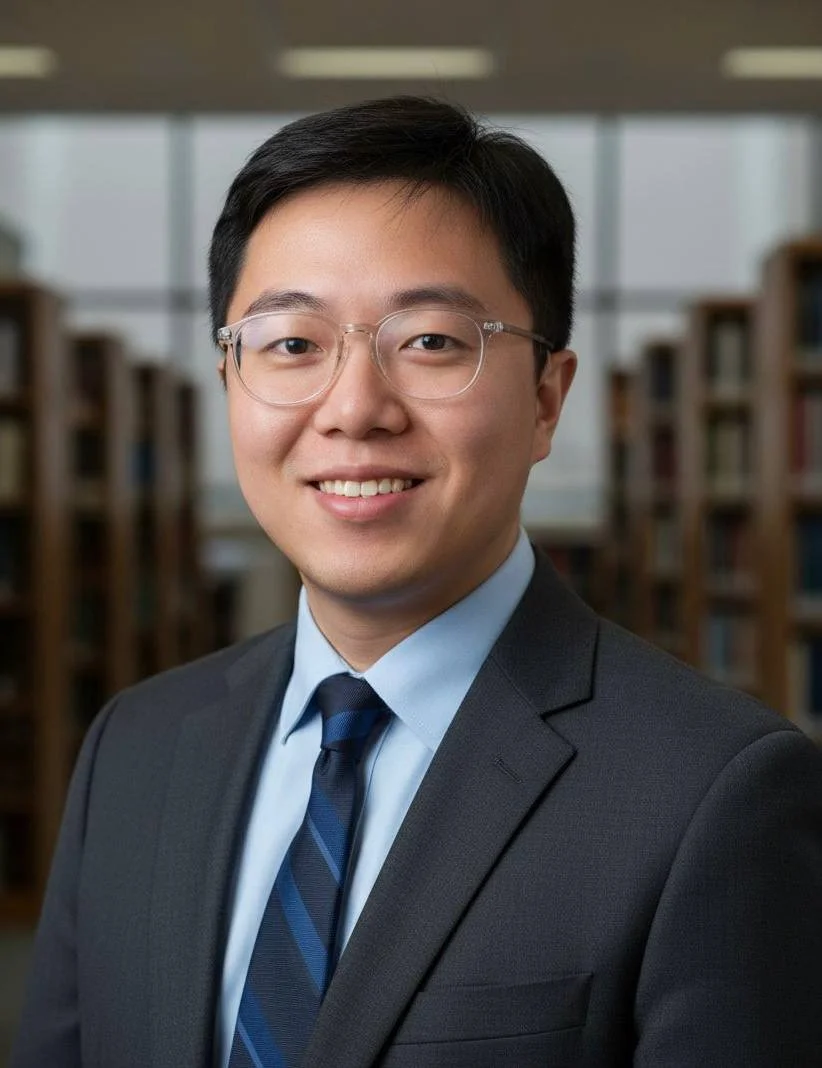
Yi Liu
Department of Applied Mathematics & Statistics
Department of Computer Science
Stony Brook University
Date: Friday, November 13th
Time: 12:30pm
Location: Laufer Center Lecture Hall 101
Title: “Large Language Models for Molecular Optimization: Learning from Feedback and Experience”
Molecular optimization is central to biological and chemical research, allowing researchers to investigate how structural changes affect molecular properties, functions, and interactions. It aims to modify an existing molecule to achieve a desired property while preserving relevant structural and functional constraints. Real-world examples include improving small-molecule solubility, changing peptide binding specificity, and adapting protein structural features. The enormous number of possible variants makes exhaustive exploration infeasible. Instead, researchers progressively refine molecules through repeated editing, experimental or computational evaluation, and expert guidance. Large language models (LLMs) offer a natural way to support this iterative process owing to their conversational capabilities and broad scientific knowledge.
In this talk, I will present our two recent works, RL-Guider and Feedback to Reasoning (F2R). RL-Guider uses a reinforcement learning planner to select natural-language editing suggestions for an LLM. The planner learns from molecular evaluation rewards, improving its guidance while keeping planning costs low. F2R takes this further by examining why edits succeed or fail. Results show improved optimization performance across different molecular tasks. By learning from previous successes and failures, our methods can reduce trial-and-error, enable more systematic exploration of structure–function relationships, and help researchers identify promising molecular variants without requiring specialized AI expertise.
Finally, I will discuss our next steps toward a more general, powerful, and automated framework for molecular optimization. We aim to integrate the world-level knowledge of LLMs with expert-level knowledge from geometric deep models encoding 3D molecular graphs. Building on this integration, we envision AI agents that automate the whole molecular optimization workflow, from data retrieval and system setup to molecular optimization, evaluation, analysis, and reporting. Our longer-term goal is to connect these computational workflows with robotic experimentation, enabling closed-loop scientific discovery.
Host: Carlos Simmerling & Lina Carlini
