Bahar lab awarded R01 for Allosteric Modulation of Glutamate Transport
Bahar Lab Members
The Laufer Center is pleased to announce that Director Ivet Bahar has been awarded a multi-PI R01 grant from the National Institute of Neurological Disorders and Stroke (NINDS), in collaboration with Andreia Mortensen (Drexel University) and Olga Boudker (Cornell University). The five-year award (2R01-NS111767, 8/7/2026–5/31/2031) will support research into the mechanism of allosteric modulation of glutamate transporters, advancing our understanding of the structural and dynamic basis of neurotransmitter regulation — with implications for neurological disease and therapeutic development.
More of Ivet’s recent projects!
Below is the (shortened) abstract from NIH Reporter
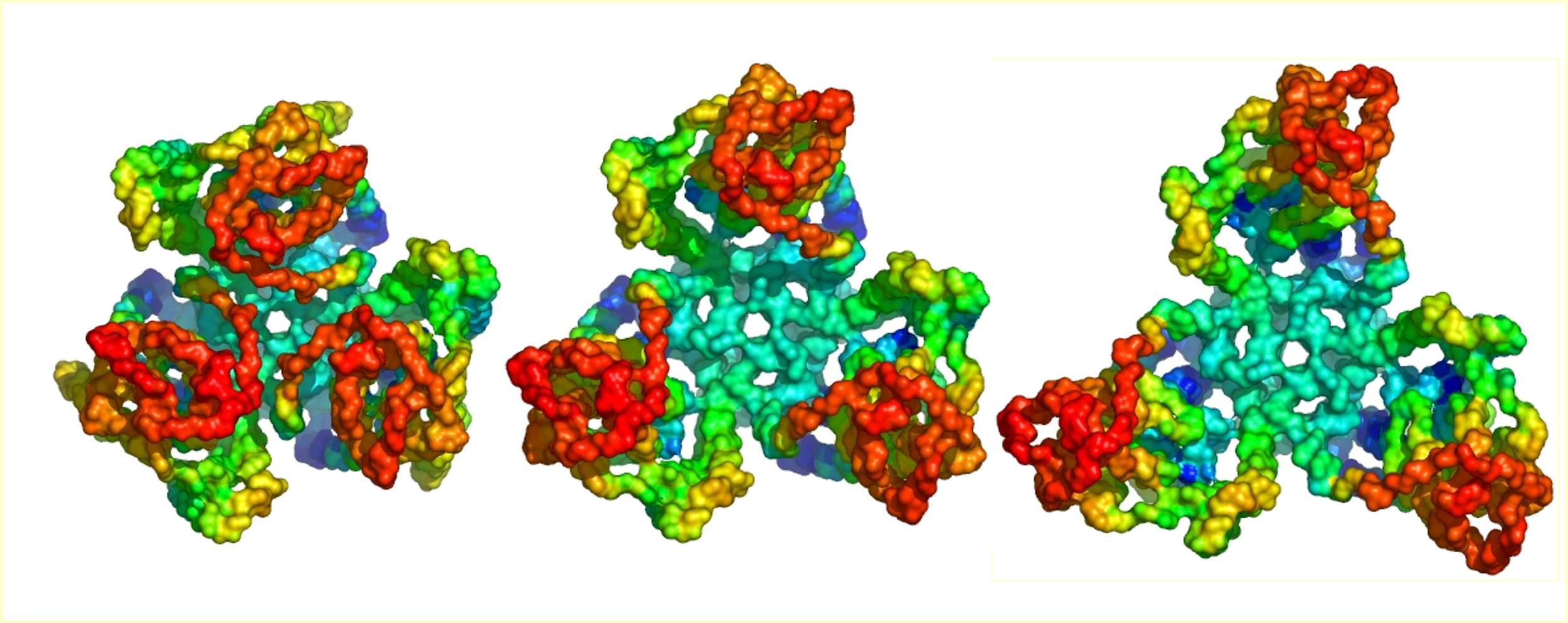
Excitatory amino acid transporters (EAATs) remove synaptically released glutamate and maintain extracellular glutamate concentrations below neurotoxic levels. Removal of excess glutamate is a clinically relevant approach to treat neurodegenerative and neuropsychiatric diseases. Our previous studies identified and characterized compounds that are positive and negative allosteric modulators (PAMs and NAMs, respectively) of EAAT activity. We have achieved significant advances in understanding the molecular mechanisms of allosteric modulation of EAATs, through site-directed mutagenesis and computational modeling studies that generated a library of selective and non-selective PAMs and NAMs; characterized compound NA-014, a selective EAAT2 PAM, in in vivo rodent models and demonstrated that it reduces cocaine-seeking behavior and alleviates nociceptive pain.. We determined and analyzed high-resolution cryo-EM structures of two EAAT isoforms in complexes with PAMs, and developed a first of its kind approach to measure the conformational dynamics of human EAATs using single- molecule Förster resonance energy transfer (smFRET) total internal reflection (TIRF) microscopy. In the current project, we propose to advance our understanding of the molecular mechanisms of allosteric modulation of EAATs., integrating multidisciplinary knowledge of the transport function, 3D structures, and single-molecule dynamics of the transporters and their complexes with the allosteric compounds. In the first aim, we will characterize the interactions of PAMs and NAMs with human EAATs and elucidate the key residues and chemical moieties that stabilize the bound forms using molecular biology and computational approaches. In the second aim, we will establish the structural and dynamic basis of PAMs and NAMs using the established Cryo-EM and smFRET experimental platforms. In the third aim, we will determine and validate the mechanism of action of PAMs and NAMs by computational modeling and simulations. These studies will inform translational research for developing novel therapeutics, as these transporters are critical drug targets for severe CNS conditions like substance use disorders, stroke, epilepsy, ALS, and neuropathic pain.
See all grants received to date by Ivet Bahar on Bahar’s NIH reporter page
